Why Regular Heart Checkups Are Important After Age 40
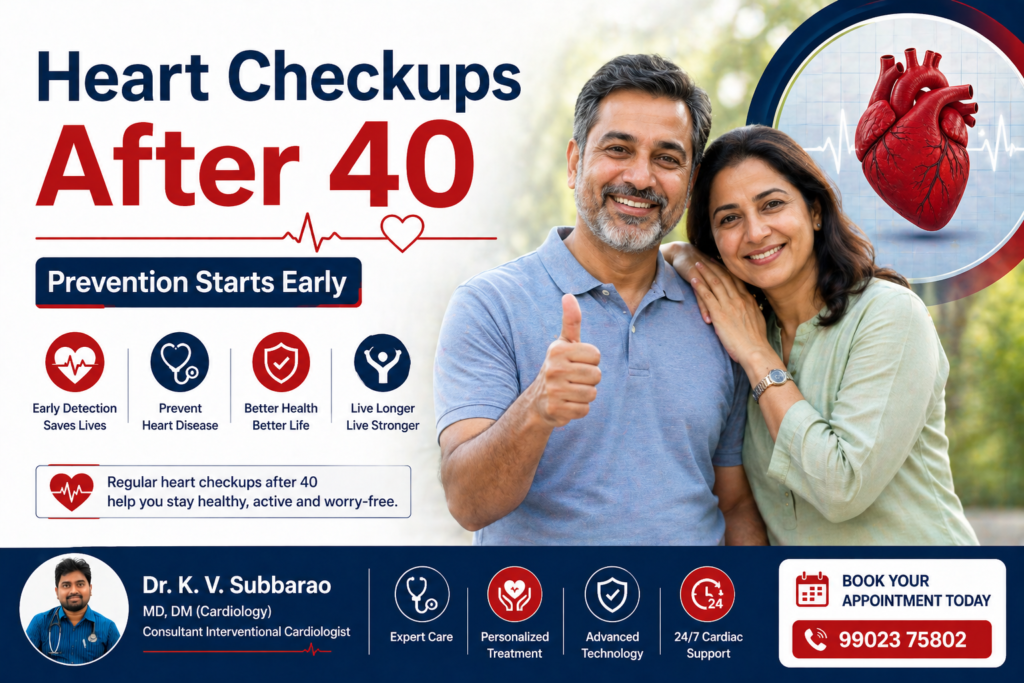
Introduction After the age of 40, the risk of heart disease, high blood pressure, diabetes, and cholesterol-related problems can increase. Many heart conditions develop silently without clear symptoms. Regular heart checkups help identify risks early and allow timely treatment before serious complications occur. Why Age 40 Matters As we grow older, blood vessels may become less flexible, cholesterol can build up, and lifestyle stress may affect heart health. Even people who feel healthy should monitor their heart regularly after 40. Benefits of Regular Heart Checkups 1. Early Detection of Heart Problems Routine screening can identify issues such as blocked arteries, irregular heartbeat, or reduced heart function before symptoms become severe. 2. Blood Pressure Monitoring High blood pressure often has no warning signs. Regular checks help prevent heart attack, stroke, and kidney damage. 3. Cholesterol and Diabetes Screening High cholesterol and uncontrolled sugar levels can silently damage blood vessels. Early treatment lowers long-term risk. 4. Personalized Lifestyle Guidance A cardiologist can guide you on diet, exercise, weight control, stress management, and sleep habits based on your health condition. 5. Peace of Mind Knowing your heart is healthy gives confidence and helps you stay proactive about your well-being. Common Tests in a Heart Checkup Who Should Get Checked Earlier? You may need earlier or more frequent checkups if you have: Conclusion Regular heart checkups after 40 are one of the smartest steps for a healthier future. Prevention and early diagnosis can save lives. CTA: Book your heart health checkup today with Dr. K. V. Subbarao for expert cardiac care and personalized guidance.
How to Keep Your Heart Healthy: 7 Simple Daily Habits
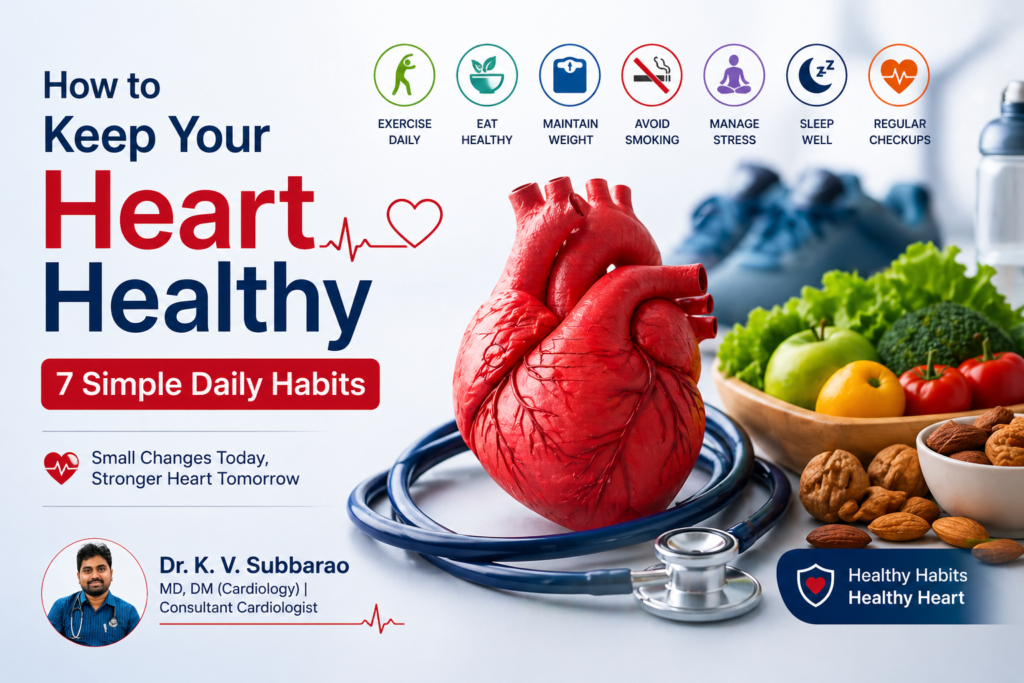
Introduction A healthy heart is the foundation of a healthy life. Small daily habits can make a big difference in reducing the risk of heart disease, high blood pressure, and other cardiovascular problems. By making simple lifestyle changes, you can protect your heart and improve your overall well-being. 1. Eat a Balanced Diet Choose fresh fruits, vegetables, whole grains, nuts, and lean proteins. Reduce fried foods, sugary drinks, and processed snacks. Limiting salt and unhealthy fats helps maintain healthy blood pressure and cholesterol levels. 2. Stay Physically Active Regular exercise keeps the heart strong and improves blood circulation. Walking, cycling, yoga, or light workouts for at least 30 minutes a day can support long-term heart health. 3. Maintain a Healthy Weight Excess body weight can increase the risk of diabetes, high blood pressure, and heart disease. A balanced diet and regular activity help maintain a healthy weight. 4. Avoid Smoking and Tobacco Smoking damages blood vessels and increases the risk of heart attack and stroke. Quitting smoking is one of the best decisions for your heart and overall health. 5. Manage Stress Long-term stress may affect heart health. Practice relaxation techniques such as deep breathing, meditation, prayer, or spending time with family and friends. 6. Get Quality Sleep Poor sleep can impact blood pressure, energy levels, and heart function. Aim for 7 to 8 hours of quality sleep each night. 7. Schedule Regular Health Checkups Routine checkups help detect heart problems early. Monitoring blood pressure, sugar, cholesterol, and heart function can prevent serious complications. When to Consult a Cardiologist If you experience chest pain, shortness of breath, fatigue, palpitations, or high blood pressure, consult a heart specialist without delay. Conclusion Healthy habits started today can protect your heart for years to come. Even small changes in diet, exercise, and lifestyle can create lasting benefits. CTA: For complete heart checkups and expert cardiac care, book your consultation with Dr. K. V. Subbarao today.
5 Warning Signs of Heart Disease You Should Never Ignore
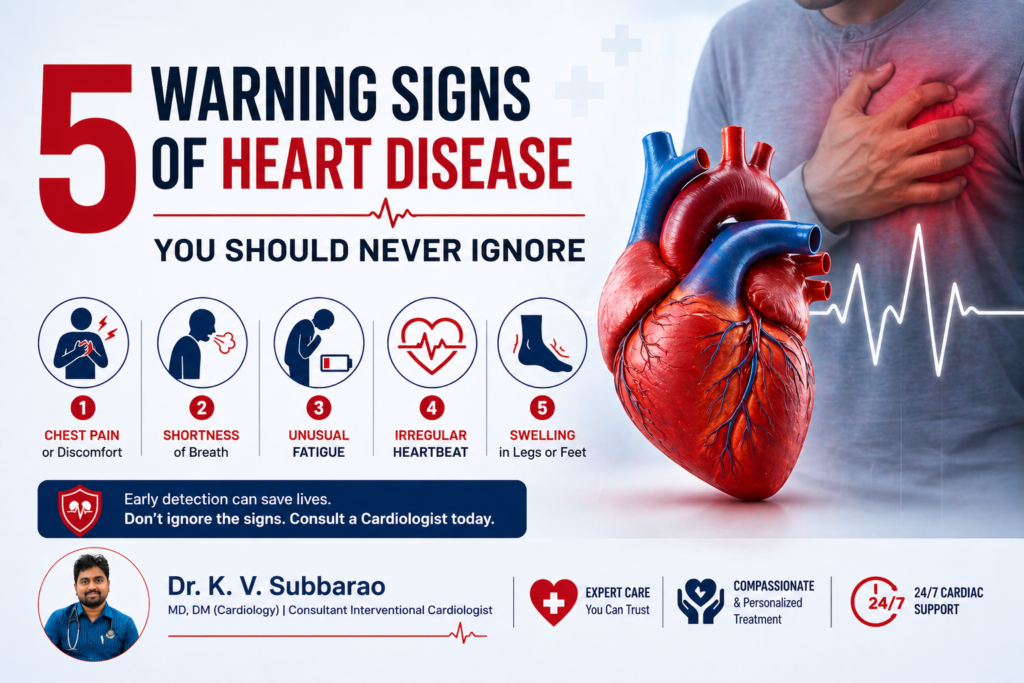
Introduction Heart disease is one of the most common health concerns today. Many people ignore early symptoms and seek help only when the condition becomes serious. Recognizing the warning signs early can help prevent complications and protect your heart health. 1. Chest Pain or Discomfort Chest pain, pressure, heaviness, or tightness should never be ignored. It may happen during activity or even while resting. This can be an early sign of reduced blood flow to the heart. 2. Shortness of Breath If you feel breathless while walking, climbing stairs, or doing light work, it may be related to heart function. Difficulty breathing can be a sign that the heart is not pumping efficiently. 3. Unusual Fatigue Feeling tired all the time without a clear reason can sometimes be linked to heart problems. If normal daily tasks feel exhausting, it is wise to get checked. 4. Irregular Heartbeat A racing heartbeat, skipped beats, or frequent palpitations may indicate an underlying cardiac issue. Some rhythm problems need medical attention. 5. Swelling in Legs or Feet Swelling in the legs, ankles, or feet can happen when the heart is unable to pump blood properly. This symptom should be evaluated promptly. When to See a Cardiologist If you notice any of these symptoms, do not delay medical advice. Early diagnosis and treatment can make a big difference. Conclusion Your heart often gives warning signs before a major problem occurs. Listen to your body and seek expert care when needed. CTA: For expert heart care and consultation, book an appointment with Dr. K. V. Subbarao.